



Binge Eating Disorder Treatment PlanAI Template IconToolbar IconShare Icon

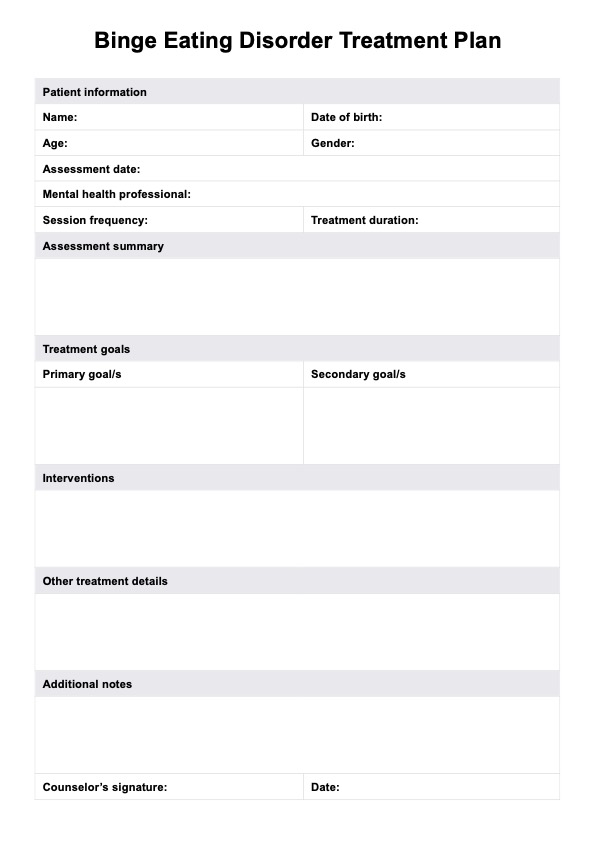
Binge Eating Disorder Treatment Plan

Download a structured Binge Eating Disorder Treatment Plan to plan strategies and ways to support clients effectively.

Gale Alagos avatar

By Gale Alagos on Aug 2, 2025.

Fact Checked by Nate Lacson.

Use Template

What is a Binge Eating Disorder Treatment Plan?

A Binge Eating Disorder Treatment Plan is a well-organized and comprehensive approach to treating binge eating disorder. The typical components are gathering information about the client's binge eating experiences, setting goals, identifying strategies and action steps for achieving those goals, and tracking progress to treat binge eating disorder more effectively.

The main goal of a Binge Eating Disorder Treatment Plan is to help individuals with binge eating disorders achieve their recovery goals and improve their overall mental health and well-being. The plan is excellent for individuals because it takes a structured and personalized approach to identifying and addressing the underlying factors that contribute to their binge eating behavior.

Treating this disorder involves various strategies and techniques and different specialists to help individuals manage their symptoms and triggers, especially for cases of severe binge eating disorder (National Eating Disorders Association, 2023). Cognitive-behavioral therapy (CBT), mindfulness practices, behavioral weight loss treatment, and nutritional counseling are some examples. Non-food alternatives, such as exercise, hobbies, or social activities, may also be included to help people manage their emotions and improve their overall health and well-being.

The Binge Eating Disorder Treatment Plan is invaluable for anyone attempting to overcome a binge eating disorder. The plan can help individuals achieve their recovery goals and improve their eating habits and overall quality of life by offering a personalized and structured approach to treatment.

Binge Eating Disorder Treatment Plan Template

Download PDF Template

How to use this Binge Eating Disorder Treatment Plan template

Having a structured and personalized approach to recovery can be beneficial for you and your patients. We created a Binge Eating Disorder Treatment Plan Template to help you get started. Here's how to put it to use:

Step 1: Access or download the template

Click on "Use template" to customize and edit the template in the Carepatron app or click on "Download" for a fillable PDF copy.

Step 2: Initial documentation and ssessment

Begin by completing the patient information section with demographic details and establishing the framework for treatment frequency and duration. The assessment summary should include the diagnostic criteria met, severity of symptoms, and any comorbid conditions that may impact treatment.

Step 3: Goal setting

Differentiate between primary and secondary treatment goals, ensuring they are specific, measurable, achievable, relevant, and time-bound (SMART). Primary goals typically focus on reducing binge eating episodes and establishing regular eating patterns, while secondary goals may address related concerns such as mood regulation or social functioning.

Step 4: Intervention planning

Document the selected therapeutic approaches, which may include cognitive behavioral therapy, dialectical behavior therapy, or other evidence-based interventions. Detail specific strategies, frequency of interventions, and any adjunct treatments such as nutritional counseling or group therapy.

Step 5: Documentation and review

Complete the additional treatment details and notes sections with any specific considerations, potential barriers to treatment, or risk factors that require monitoring. Regular review and updates to the treatment plan ensure that interventions remain aligned with patient progress and changing needs.

When would you use this template?

The Binge Eating Disorder Treatment Plan template serves as a standardized documentation tool for a mental health professional managing patients with BED. Its structured format facilitates comprehensive care planning while maintaining clinical accountability and treatment consistency:

Initial consultation and diagnosis

The template is particularly valuable during the first few sessions when you diagnose binge eating disorder or if the patient presents with binge eating behaviors. It provides a framework for documenting essential baseline information and establishing a clear treatment trajectory.

Treatment transitions

Implementation is crucial when transitioning patients between levels of care or when modifying treatment approaches. The template helps track changes in treatment intensity, frequency, or modality while maintaining continuity of care.

Progress review periods

Regular treatment plan reviews, typically conducted every 3-6 months or when significant changes occur, benefit from this structured format. The template facilitates evaluation of progress toward established goals and helps identify areas requiring modification.

Insurance and administrative requirements

The template meets most insurance providers' documentation requirements for eating disorder treatment authorization. It includes essential elements required for continued coverage while maintaining clinical utility. The standardized format helps streamline administrative processes while ensuring thorough clinical documentation.

Benefits of free Binge Eating Disorder Treatment Plan

Binge eating disorder can be a challenging condition to manage, and a comprehensive treatment plan can be a helpful tool for individuals who binge eat or struggle with binge eating disorder symptoms.

Here are some benefits of using a free Binge Eating Disorder Treatment Plan:

Structured and organized approach

This treatment plan can help individuals feel more in control of their situation by establishing a clear and structured path to recovery. This can alleviate anxiety while also providing a sense of direction and purpose. Since the template is also formatted to be a general treatment plan, it can also be customized to be used for other disorders such as bulimia nervosa.

Helps identify triggers and coping strategies

Individuals can identify triggers that lead to binge episodes by reflecting on their binge-eating experiences. A treatment plan can then assist in developing coping strategies to manage these triggers and reduce the likelihood of future episodes.

Sets personalized goals and action steps

Individuals can use a treatment plan to set specific, measurable, achievable, relevant, and time-bound (SMART) goals for their recovery journey. As they work towards their goals, this can provide motivation and a sense of accomplishment.

Tracks progress and reflects on changes in self-image

Individuals can track their progress over time with a treatment plan, which can help identify patterns and areas for improvement. They gain confidence and self-esteem as they progress toward their goals.

Overall, a Binge Eating Disorder Treatment Plan is an invaluable resource for anyone attempting to manage their condition and work toward recovery. It offers a structured and personalized approach that can aid in reducing anxiety, identifying triggers and coping strategies, setting goals, tracking progress, and reflecting on changes in self-image.

Reference

National Eating Disorders Association. (2023, October 17). Binge eating disorder (BED). https://www.nationaleatingdisorders.org/binge-eating-disorder/

Commonly asked questions

The best treatment approach for binge eating disorder (BED) typically involves a combination of psychotherapy and medication. Cognitive Behavioral Therapy (CBT) is the most effective psychotherapy, focusing on changing negative thought patterns and behaviors related to eating, while medications like lisdexamfetamine (Vyvanse) and selective serotonin reuptake inhibitors can help reduce binge episodes and manage associated symptoms.

To help someone with binge eating disorder, it's crucial to provide support and encourage them to seek professional help. Listening without judgment, offering emotional support, and helping them find a qualified therapist or support group can make a significant difference in their recovery journey. Encouraging healthy eating habits and being patient with their progress are also important.

A treatment plan for eating disorders generally includes psychotherapy, nutritional counseling, and possibly medication. The plan should be individualized based on the person's specific needs, focusing on developing healthy eating patterns, addressing underlying psychological issues, and incorporating family or group therapy for additional support. Regular follow-ups with healthcare providers are essential to monitor progress and adjust the treatment as necessary.

EHR and practice management software

Get started for free

*No credit card required

Free

$0/usd

Unlimited clients

Telehealth

1GB of storage

Client portal text

Automated billing and online payments







